



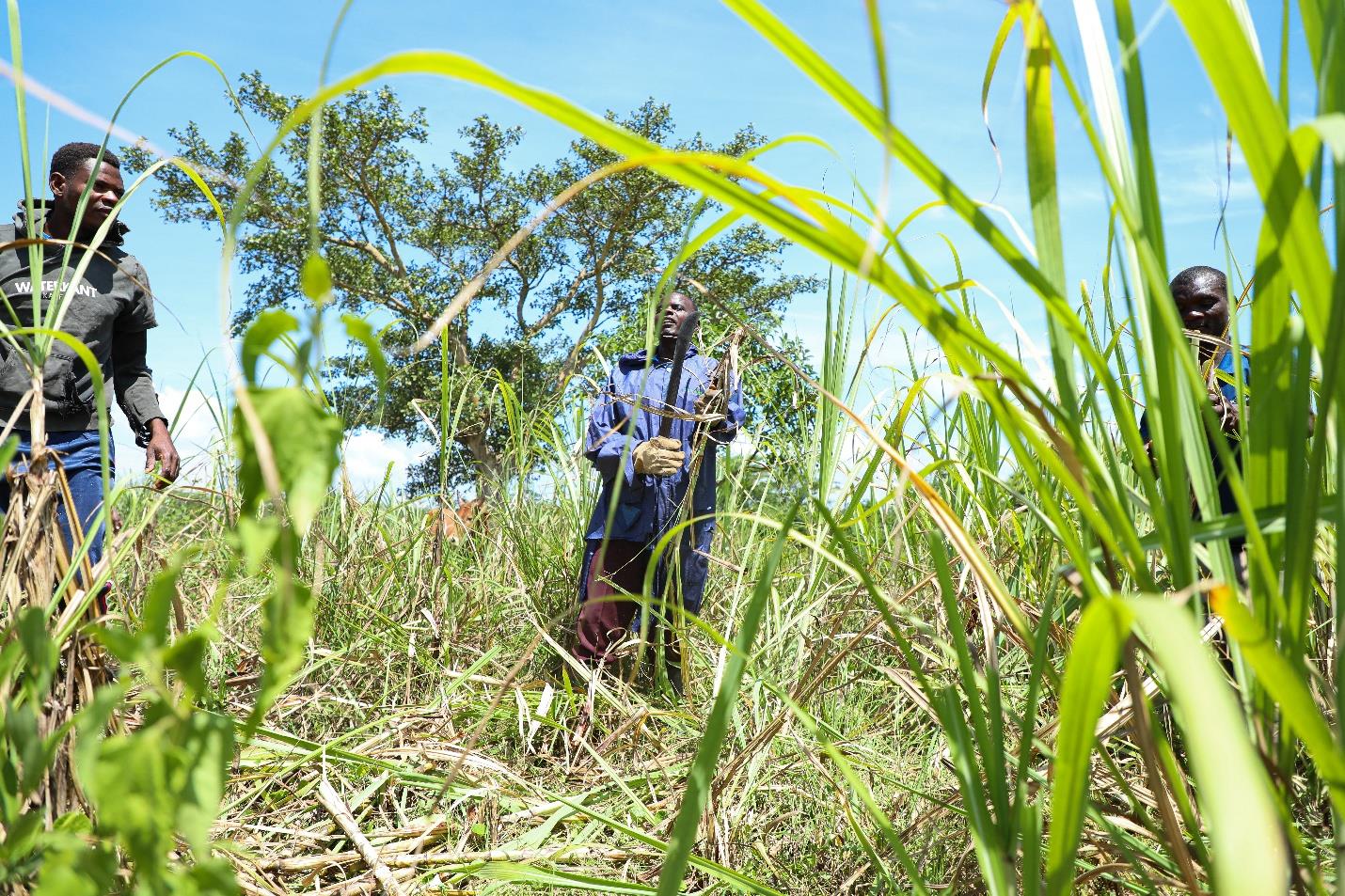
Their purpose – confronting a painful past and working to end teenage pregnancy, sexual violence, and unsafe abortions in their community.
Here, the allure of quick money and communal myths about the role of the girl child has left several young girls at the mercy of rogue sugarcane cutters.
For years, the sugarcane cutters of Ndhiwa, locally known as Obanda were feared. Their name became synonymous with exploitation, defilement, teenage pregnancies, and sexual and gender-based violence (SGBV). Teachers warned schoolgirls about them. Families blamed them for ruined futures. In a region where poverty is high and sugarcane cutting offers quick cash, girls were especially vulnerable.
According to the Kenya Health and Demographic Survey (KHDS) 2022, Homa Bay County where Ndhiwa is located records one of the highest teenage pregnancy rates in Kenya, with 23 per cent of girls aged 15–19 having begun childbearing. Behind these numbers are stories of girls forced out of school, pushed into unsafe abortions, or trapped in early motherhood.
Jackson Odhiambo, now 38, knows this reality too well.
“I used to be very arrogant, rude and violent. I would even neglect my family,” he says. For more than a decade, Odhiambo worked as a sugarcane cutter. With weekly earnings sometimes exceeding Ksh 6,000, he admits that he and others spent their money exploiting young girls and women.
“Several school-going girls were left pregnant by us and their education got stopped. Even the young married women lost their marriages because of us, ” he said.
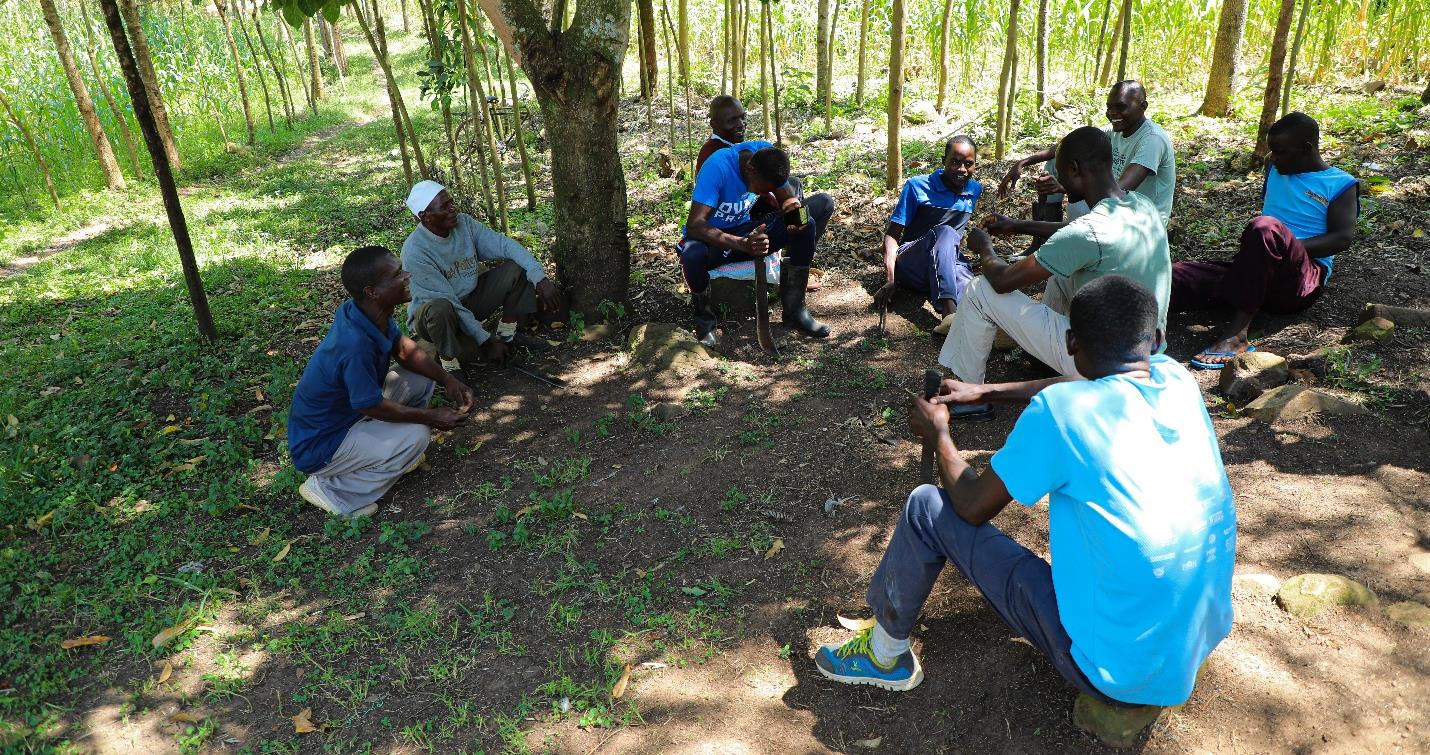
Looking back, Odhiambo says, “I realized I was destroying lives through the forced abortions, often unsafe.”
The environment made abuse easy. Long days in the fields, cash in hand, alcohol, and peer pressure reinforced harmful behavior. Violence became normal. Odhiambo admits disappearing from home for days after being paid, dismissing his wife whenever she questioned him.
Today, however, a reformed Odhiambo is now among those leading the drive to change this behavior and protect the vulnerable from the vices that were common with the Obandas.
His turning point came when he joined the Nyarongi Paralegal Network , a community-based initiative that trains men and women as Sexual and Reproductive Health and Rights (SRHR) champions.
“I was trained alongside other men, and it has been a journey full of blessings,” he says.
Through dialogue, legal awareness, and reflection, Odhiambo began to understand the harm he had caused to the girls and his own family. He stopped engaging in violence, began supporting his children’s education, and rebuilt his marriage.
“I have even paid dowry to my wife, “he says, with a smile on his face.
His story mirrors that of Lamech Ogola from Kanyikela South village, who also once lived recklessly.
“I believed in ‘you only live once’,” Ogola says. After dropping out of school, he turned to sugarcane cutting. He admits to having facilitated unsafe abortions for at least five schoolgirls through quack providers.
“I was not afraid of HIV. I was not afraid of the law,” he says.
Ogola’s transformation began when a fellow sugarcane cutter, who was already part of the paralegal group challenged him through conversation, rather than condemnation.
“We were just having a random talk and suddenly he started talking in parables about my bad deeds and praising Nyarongi Paralegal Network . When I asked him to tell me more about the group, he persuaded me to attend a meeting, ” he said.
Since joining the group, Ogola says his priorities have changed. He has built a house, pays school fees for his children, and openly educates others about the dangers of sexual exploitation and unsafe abortion.
His wife, Diana Akinyi, confirms the change.
“We no longer fight a lot,” she says. “I am now happily married.”
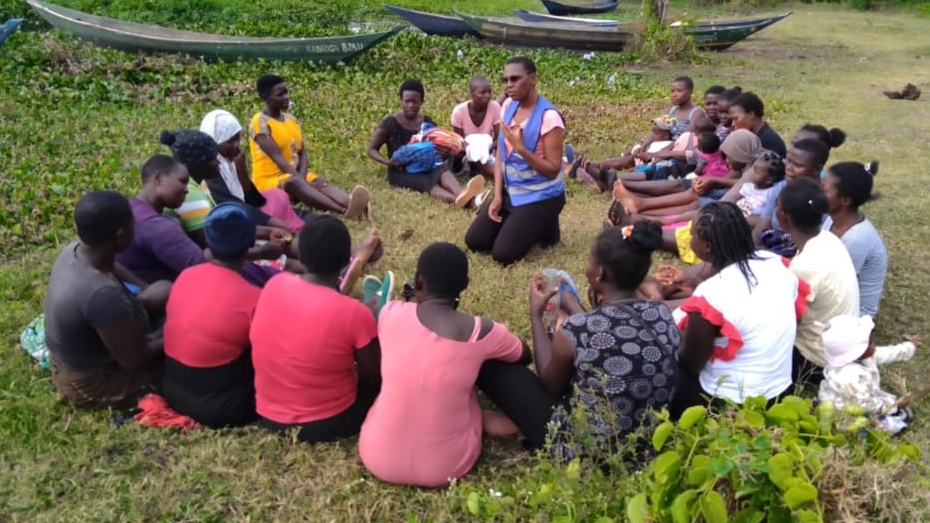
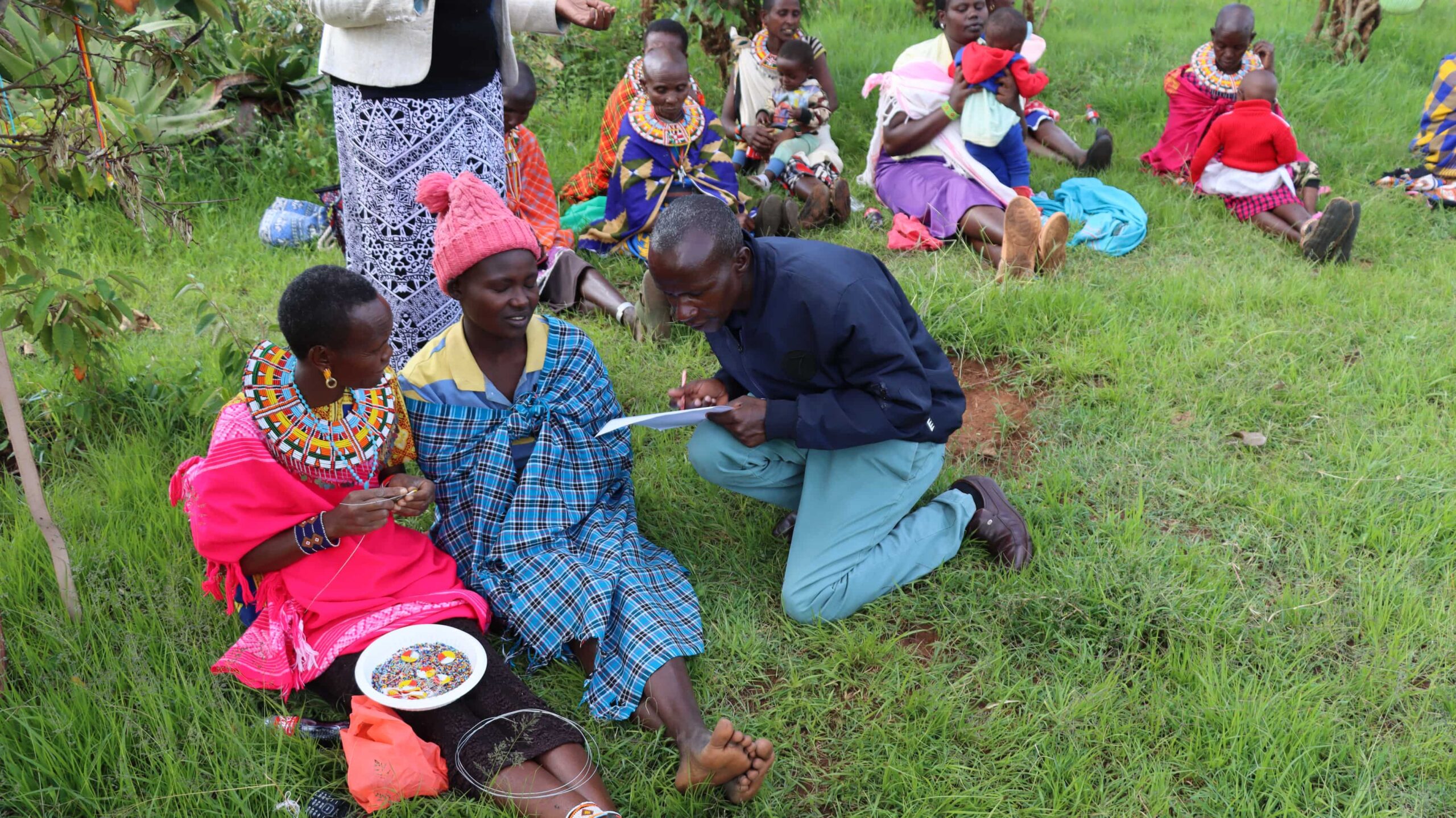
Today, the very men once feared by the community are becoming its protectors. Nyarongi Paralegal Network has also established a Community Action Group. The Community Action Group now comprises 20 trained SRHR champions, including reformed Obanda, teenage mothers, religious leaders, and mentor mothers. Together, they lead dialogues, engage young people, and work closely with local leaders.
“Before, when people saw us with young girls, they would scream,” Ogola says. “Now the chief invites me to speak at barazas.”
The impact is being reinforced by broader systems of support. To address teenage pregnancy and unsafe abortion, the Homa Bay County Government has established a 52-bed safe house in Ndhiwa Town, staffed with health workers and run-in collaboration with a private partner. The facility offers protection, medical care, and referral services for survivors.
With ongoing community engagement, mentorship, and support systems, the hope is that future generations in Ndhiwa will grow up free from teenage pregnancies, unsafe abortions, and gender-based violence.