



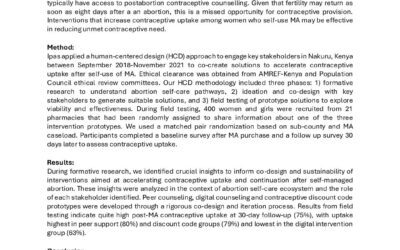
Globally, provision of post-abortion contraception is recognized as a high impact intervention that reduces rates of unintended pregnancy and unsafe abortion. Although abortion self-care — abortion with pills obtained without a prescription — is on the rise due to increased availability of safe and highly effective drugs, women accessing medical abortion (MA) outside the health system do not typically have access to post-abortion contraceptive counseling.
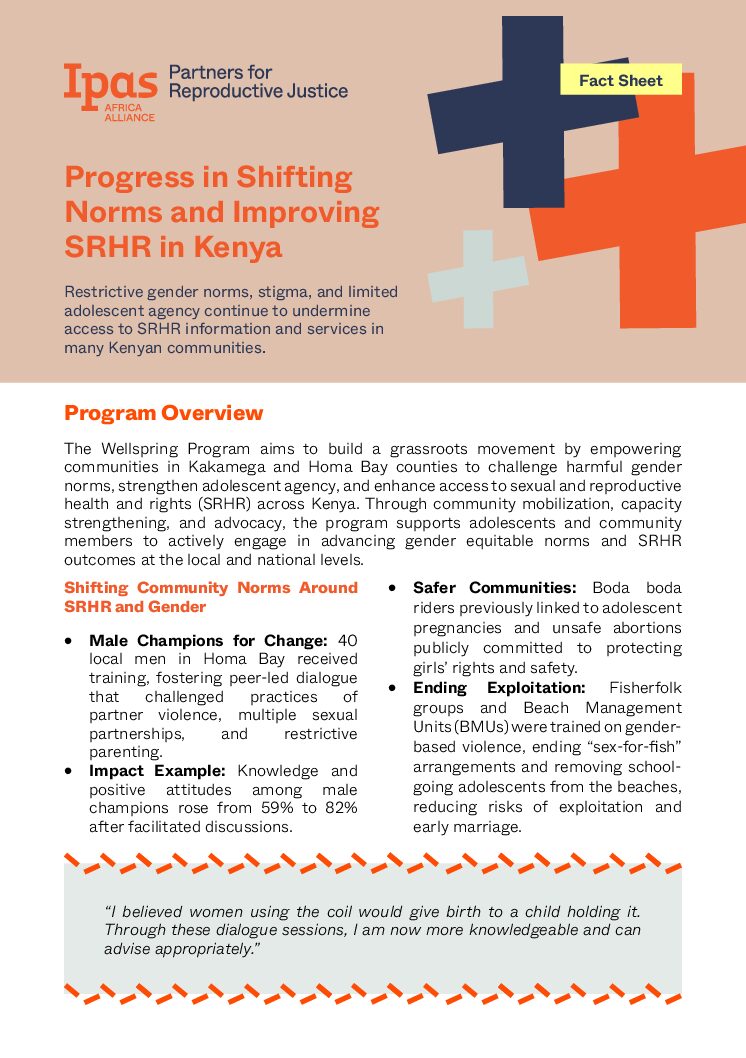
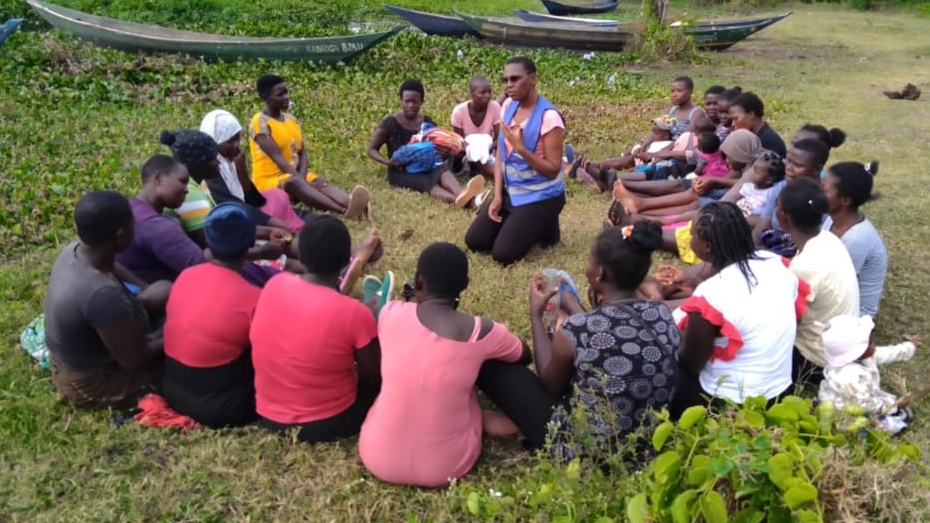
The Wellspring Program aimed to build a grassroots movement by empowering communities in Kakamega and Homa Bay counties to challenge harmful gender norms, strengthen adolescent agency and enhance access to sexual and reproductive health and rights (SRHR) across Kenya. Through community mobilization, capacity strengthening and advocacy, the program supports adolescents and community members to actively engage in advancing gender equitable norms and SRHR outcomes at the local and national levels.
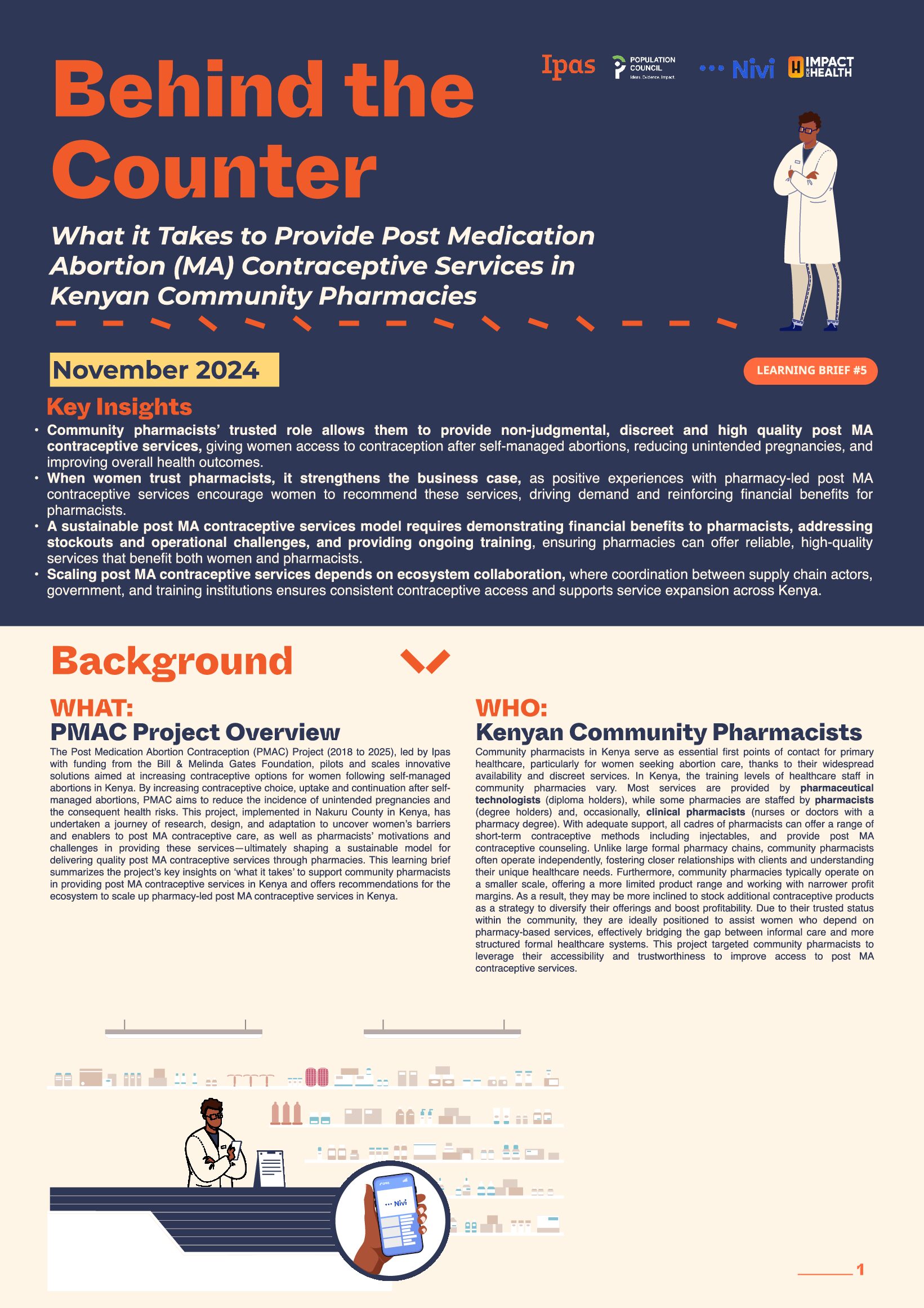
These learning briefs – a project anchor brief, a user-focused brief, and a pharmacist-focused brief – summarize lessons learned by the PMAC project during multiple phases of the project. Together, our project’s journey to finding scalable and sustainable solutions to increase uptake and continuation of post-MA contraception, and women’s and pharmacists’ journey’s to seeking and providing post-MA contraception, provide a promising road to ensuring access to care for women and sustainable business models for pharmacists.
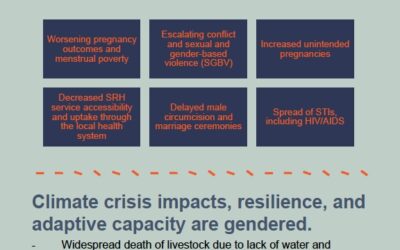
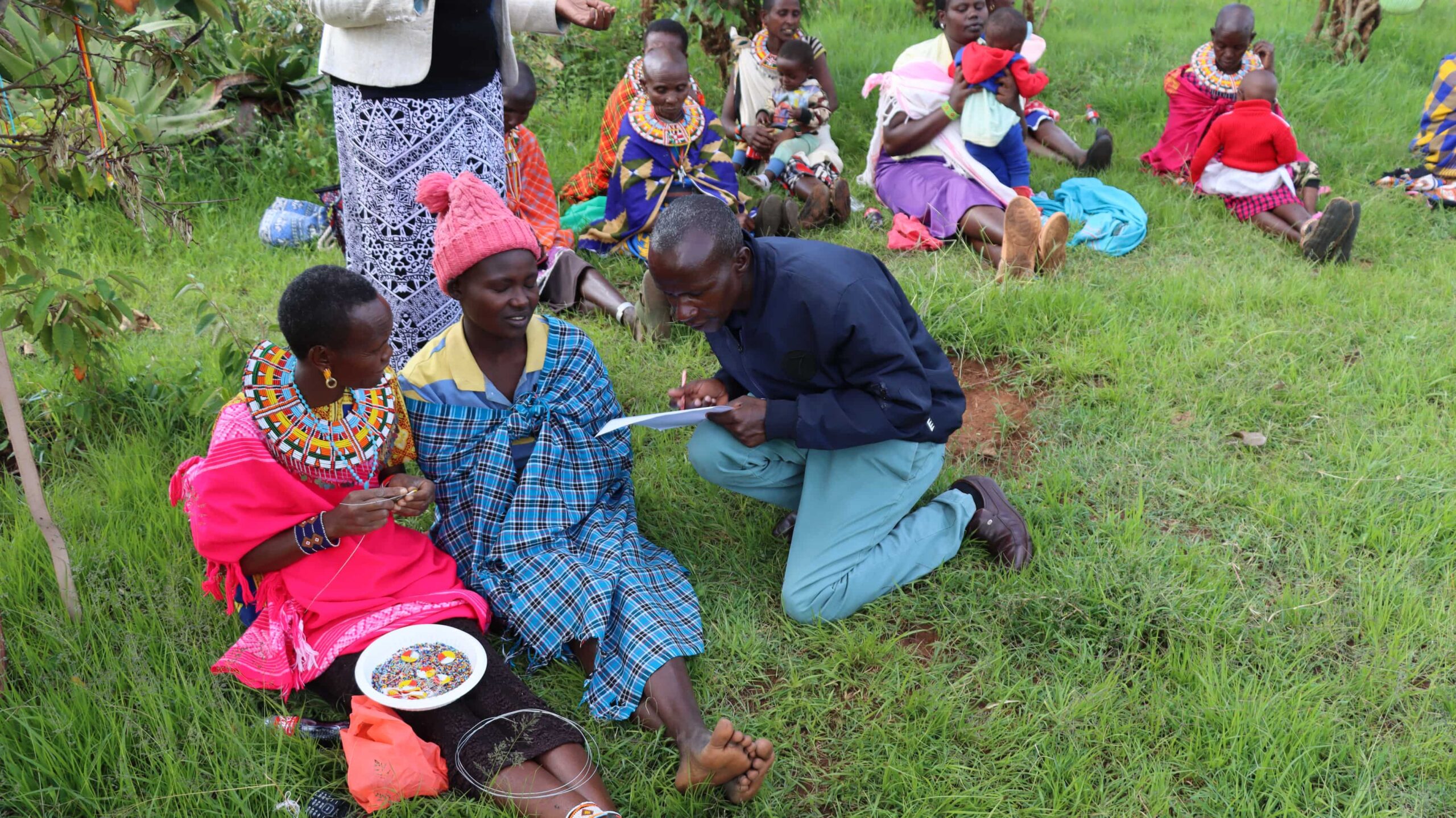
The climate crisis is negatively impacting arid- and semi-arid land communities’ sexual and reproductive health and rights.
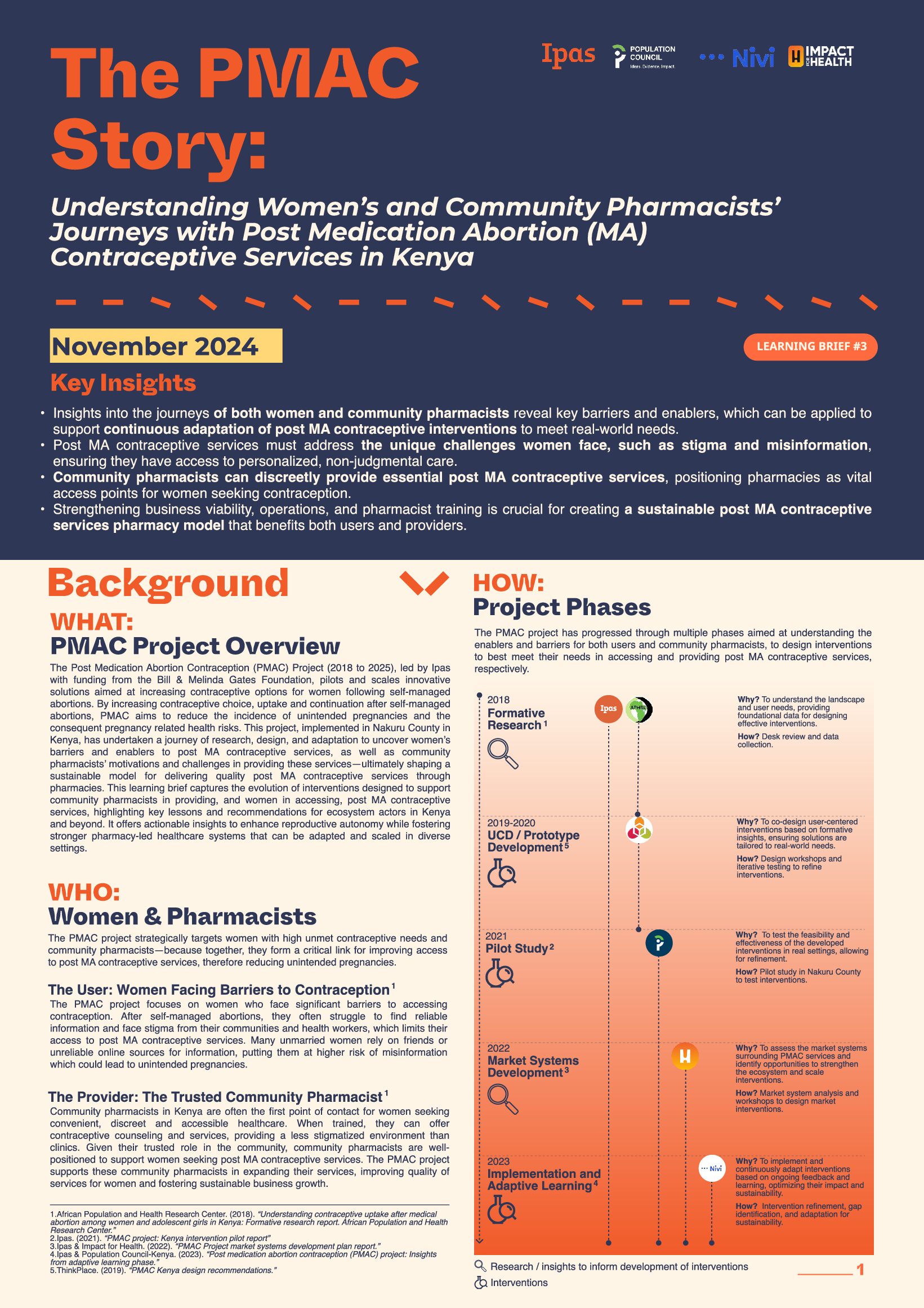
These learning briefs – a project anchor brief, a user-focused brief, and a pharmacist-focused brief – summarize lessons learned by the PMAC project during multiple phases of the project. Together, our project’s journey to finding scalable and sustainable solutions to increase uptake and continuation of post-MA contraception, and women’s and pharmacists’ journey’s to seeking and providing post-MA contraception, provide a promising road to ensuring access to care for women and sustainable business models for pharmacists.
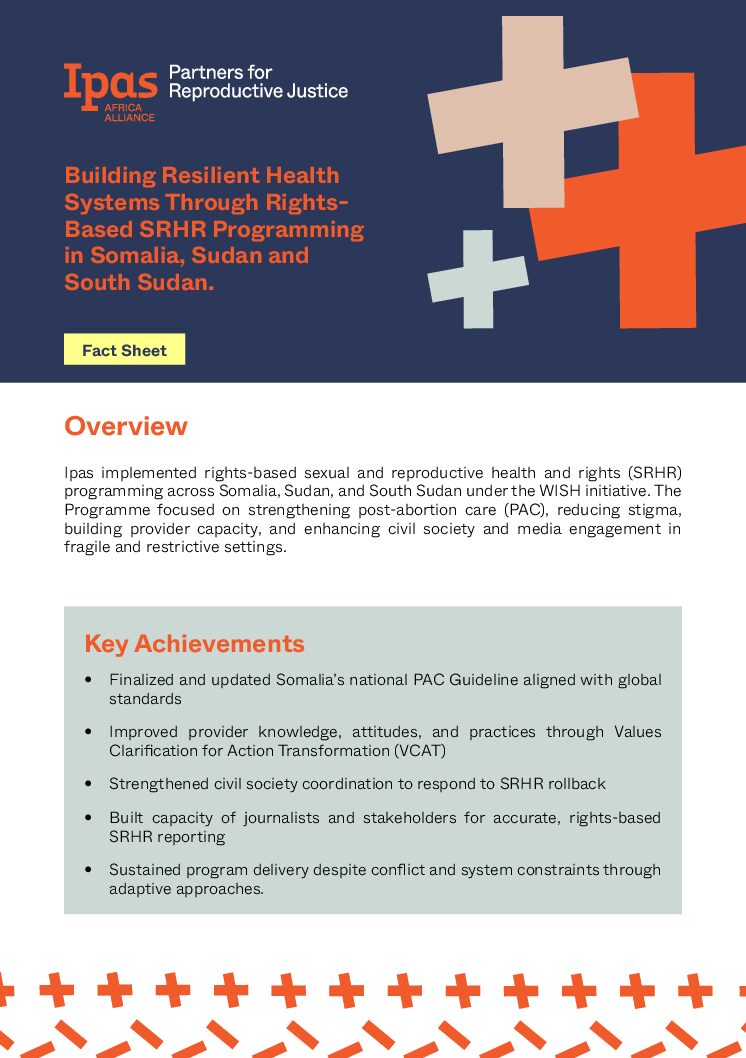
Ipas Africa Alliance implemented a rights-based sexual and reproductive health and rights (SRHR) programming across Somalia, Sudan and South Sudan under the WISH initiative. The Program focused on strengthening post-abortion care (PAC), reducing stigma, building provider capacity and enhancing civil society and media engagement in fragile and restrictive settings.
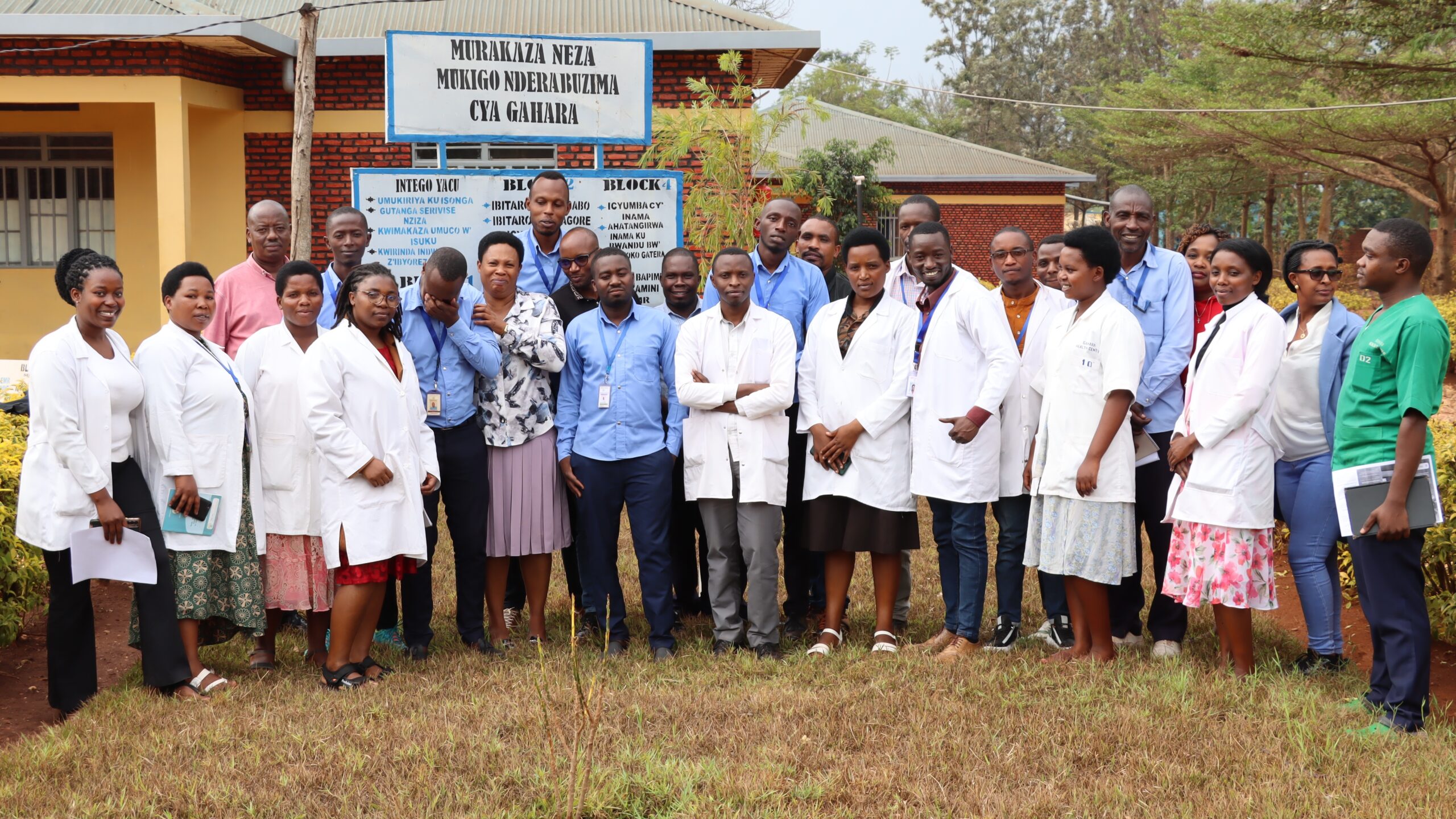
The PMAC Project, led by Ipas with Population Council-Kenya, Nivi, Impact for Health, and ThinkPlace, has worked since 2018 to strengthen delivery of post-medication abortion (post-MA) contraception through community pharmacies. Over seven years, 27 pharmacists in Nakuru were trained to provide high-quality counselling and services, while 15 in Kericho served as comparison sites. As the project nears its close in 2025, a three-day dissemination workshop (27–29 August 2025) brought pharmacists together with the Ministry of Health (MoH), Kenya Pharmaceutical Association (KPA) and partners to reflect on final evaluation findings, share experiences, and co-create strategies to sustain and scale impact.
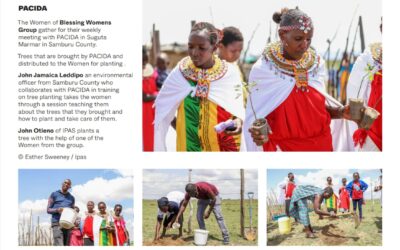
We’ve assembled a photo gallery with descriptions that depicts our work throughout the alliance.
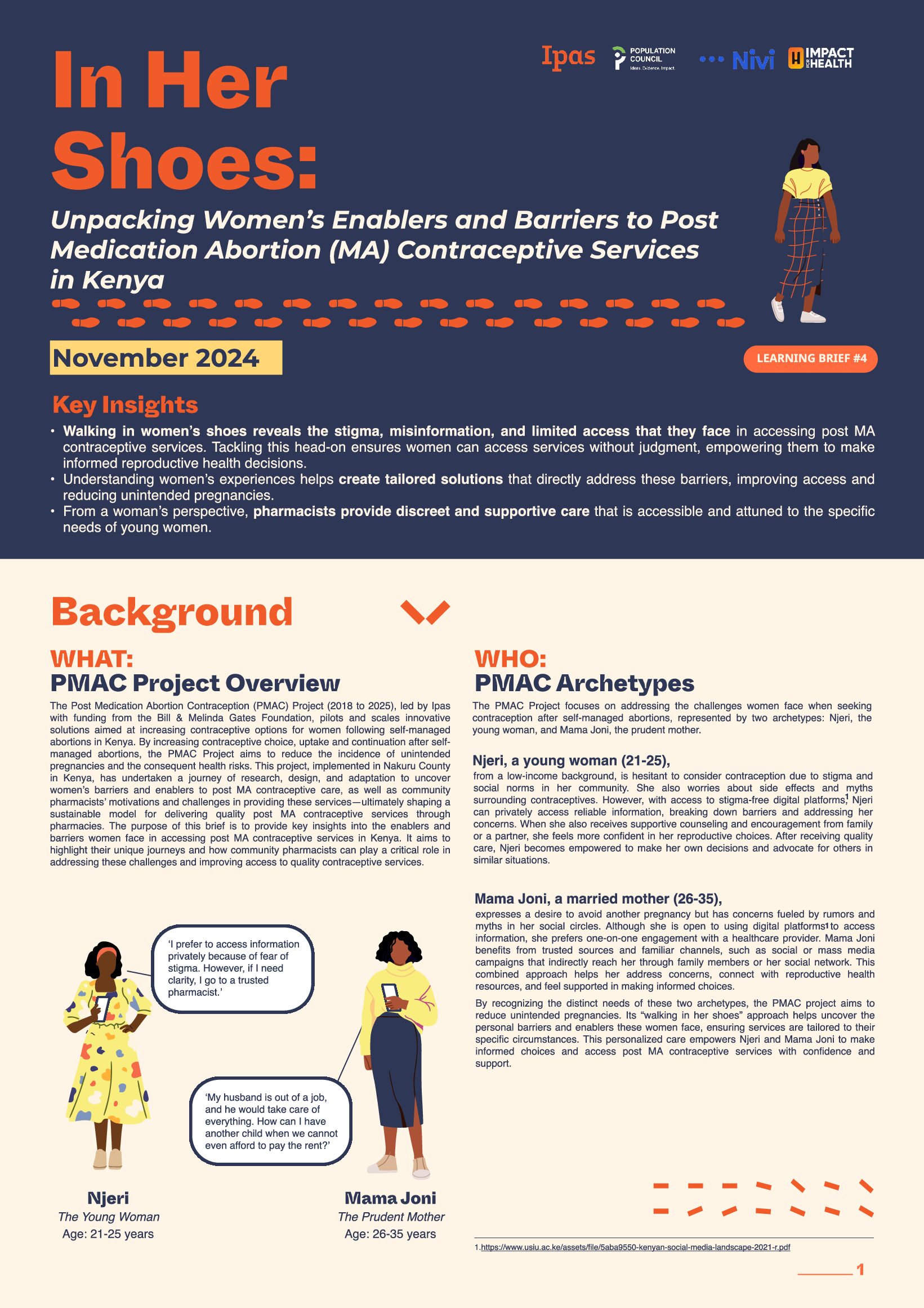
These learning briefs – a project anchor brief, a user-focused brief, and a pharmacist-focused brief – summarize lessons learned by the PMAC project during multiple phases of the project. Together, our project’s journey to finding scalable and sustainable solutions to increase uptake and continuation of post-MA contraception, and women’s and pharmacists’ journey’s to seeking and providing post-MA contraception, provide a promising road to ensuring access to care for women and sustainable business models for pharmacists.
Sustainable Development Goals call on countries to ensure universal access to sexual and reproductive health services, including modern contraception by 2030. In Kenya, many women and girls lack access to contraception services leading to rising cases of unintended pregnancy, especially among adolescents.
Ipas Africa Alliance, based in Nairobi, Kenya, is dedicated to advancing reproductive justice across Africa. Operating in Uganda, Rwanda, Tanzania, and over 20 counties in Kenya, the organization focuses on reducing deaths from unsafe abortion, transforming social norms, and enhancing legal and policy environments for safe abortion. This executive summary outlines the achievements and impact of Ipas Africa Alliance’s programs during the fiscal year 2022-2023.
Kenya has made impressive strides in advancing gender equity through the enactment of laws on domestic violence, sexual offences, establishment of affirmative funds for women-led businesses, and increasing representation of women in public and elective office.
The biggest global threat of the 21st Century is climate crisis, including associated climate-induced extreme weather events. Women and girls living in Arid and Semi-Arid Lands (ASAL) are especially disproportionately affected by the effects of drought, flooding, and heat waves due to alteration in access to health services, including SRHR and natural resources.
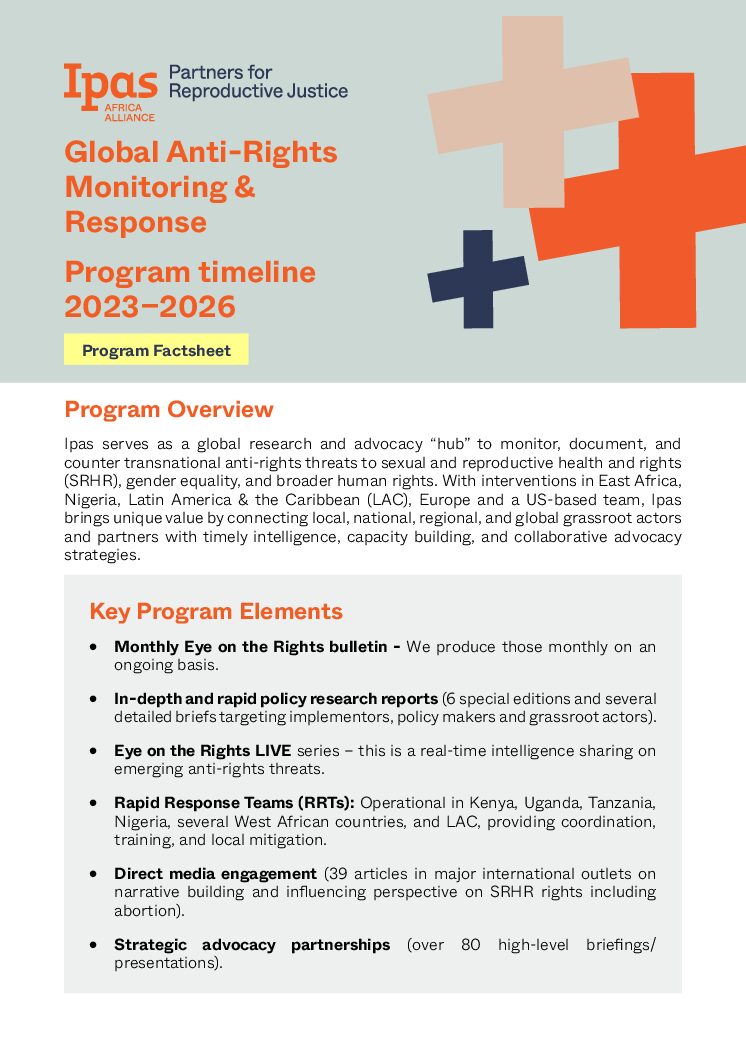
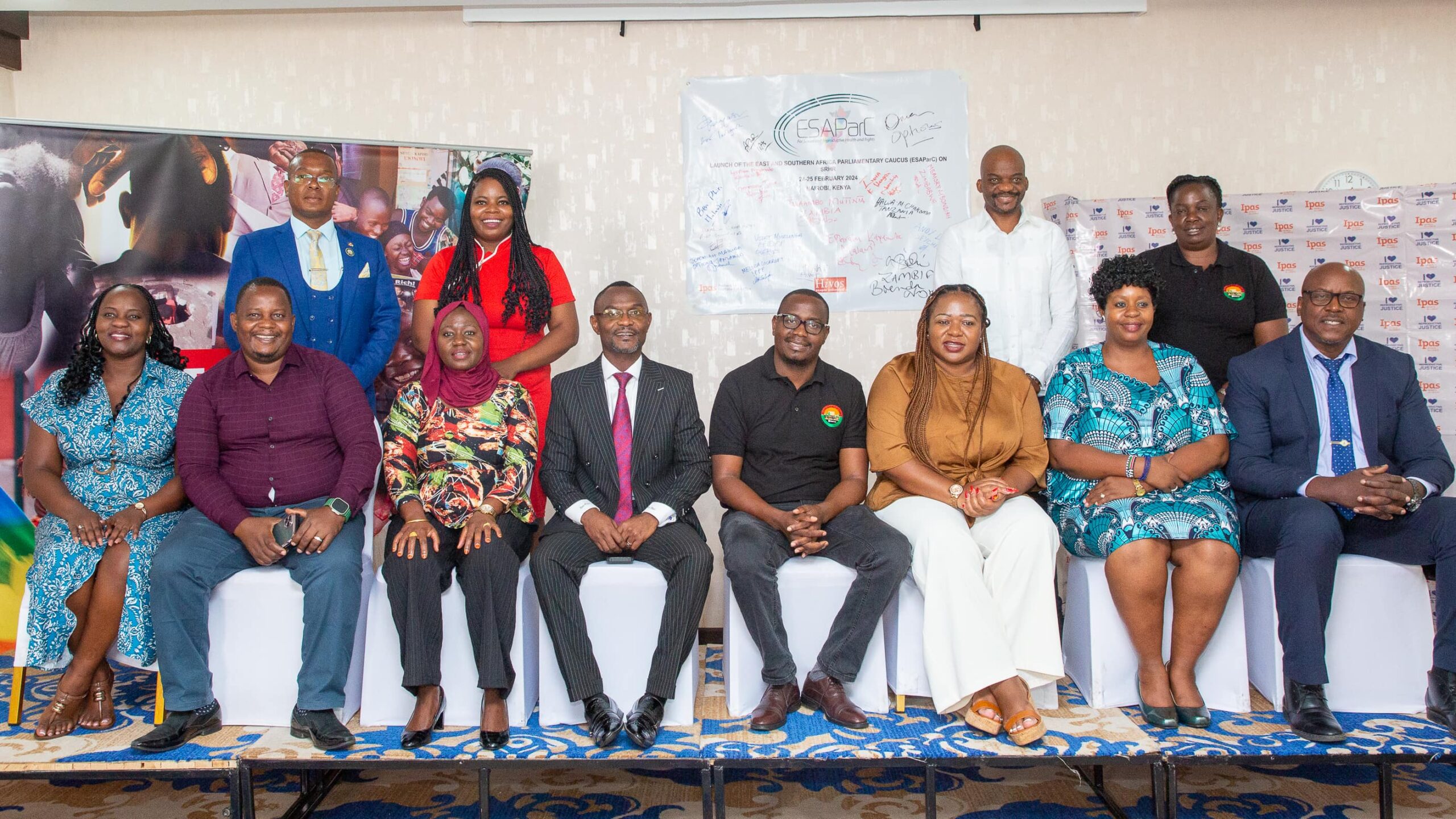
Ipas serves as a global research and advocacy “hub” to monitor, document and counter transnational anti-rights threats to sexual and reproductive health and rights (SRHR), gender equality and broader human rights. With interventions in East Africa, Nigeria, Latin America & the Caribbean (LAC), Europe and a US-based team, Ipas brings unique value by connecting local, national, regional and global grassroot actors and partners with timely intelligence, capacity building and collaborative advocacy strategies.
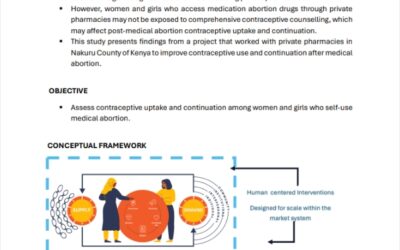
This study presents findings from a project that worked with private pharmacies in Nakuru County of Kenya to improve contraceptive use and continuation after medical abortion.