





“She was always sick and kept, I thought it was a normal illness,” Mulembe says. “I never suspected she was pregnant.”
When the condition persisted, she took a sample to the hospital to understand what was wrong. The results were shocking. Her stepdaughter was expectant. Determined to protect her, Mulembe took responsibility for the girl’s care and remained hopeful that she would carry the pregnancy safely to term.
“I decided to stand with her and take care of her,” she says. “I believed everything would be fine.”
But days later, the girl’s health deteriorated suddenly. She was rushed back to hospital, barely able to survive. Doctors later informed Mulembe that her stepdaughter had attempted to terminate the pregnancy by ingesting a washing detergent.
“The doctors did their best and saved the baby,” she recalls. “But the girl was already in life threatening condition. She died a few hours later.”
The loss left Mulembe devastated. What troubled her most was not only the death itself, but the silence that preceded it.
“She never told me she was pregnant, and she never told me what she was planning to do,” she says. “If she had talked to me, maybe things would have been different.”
Her experience mirrors a wider challenge facing girls across Kenya. Unsafe abortion remains a major contributor to maternal illness and death, particularly among adolescents. According to Ministry of Health estimates, hundreds of thousands of induced abortions occur each year, many of them under unsafe conditions. A 2025 national study by the Africa Population and Health Research Center (APHRC), in partnership with Kenya’s Ministry of Health and the Guttmacher Institute, estimates that nearly 800,000 induced abortions occurred in 2023, highlighting the urgent need for prevention of teenage pregnancy and better support systems for young girls.
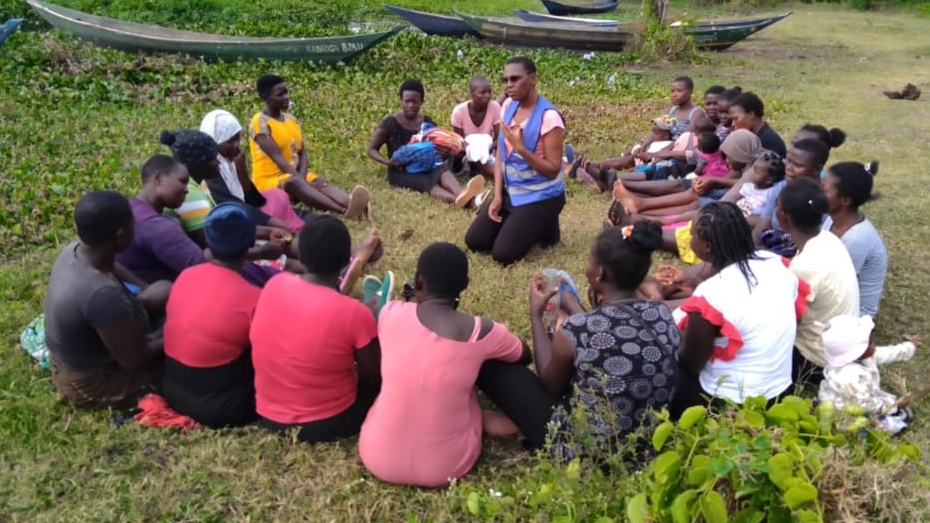
Since her stepdaughter’s death, Mulembe has turned her pain into purpose. Living with several young girls and youths who are not her biological children, she now makes it a priority to talk openly about sexual and reproductive health and to encourage trust between parents and children.
“It is important that parents become friends with their children. That close bond can help them share vital information,” says Mulembe.
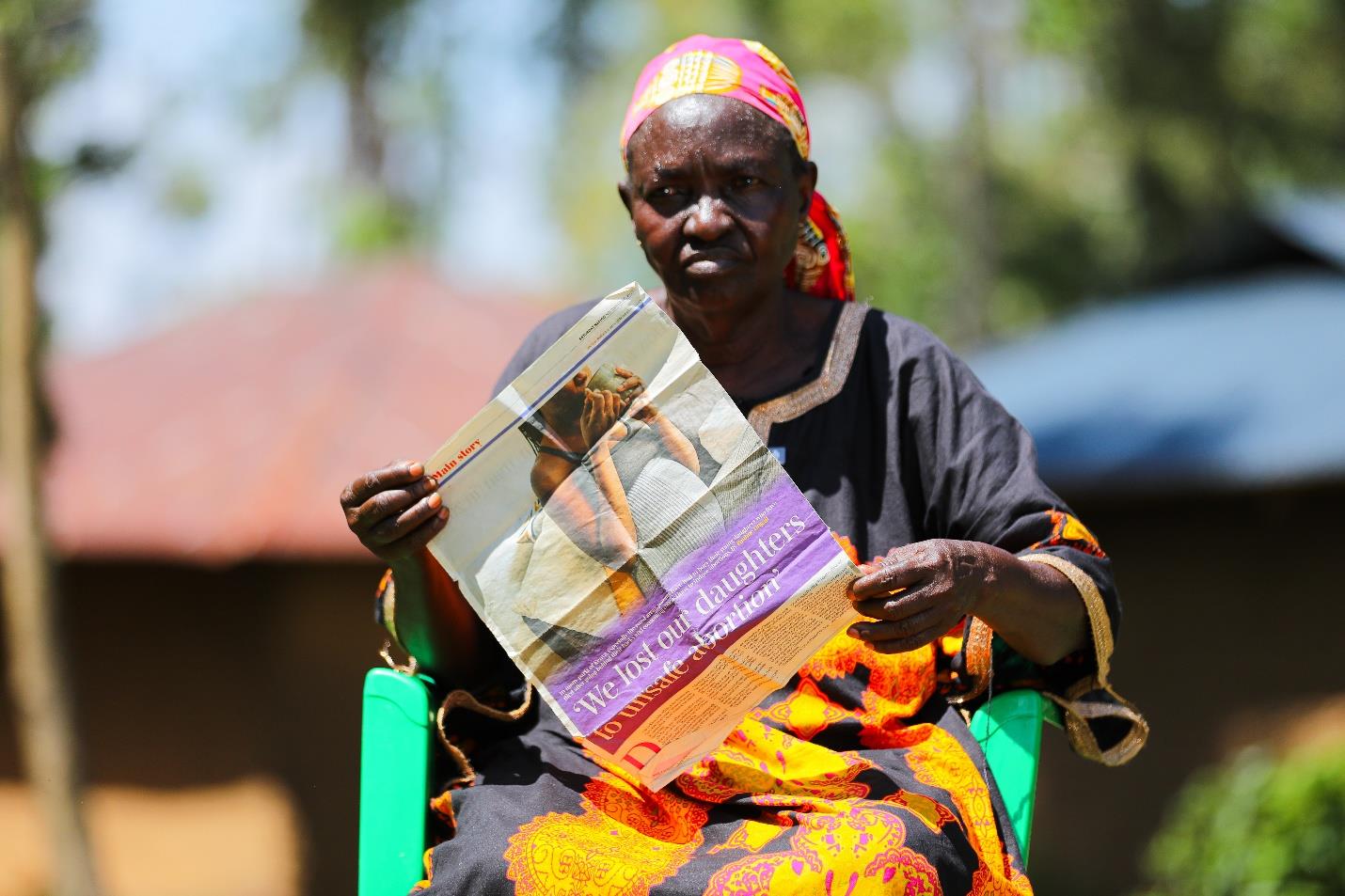
She now uses her experience to advise neighbours, parents, and guardians on the dangers of unsafe abortion and the importance of guidance and open communication. A newspaper article documenting her stepdaughter’s death is among the items she carries with her as a reminder of what silence can cost. She uses it as part of her evidence to encourage better parenting and discourage unsafe abortion practices.
“No child should die because they were afraid to speak,” she says. “There are safer ways to manage these situations, but parents must be present.”
For Mulembe, better parenting is not about blame. It is about presence, trust, and ensuring that no child is left to navigate crisis alone.