



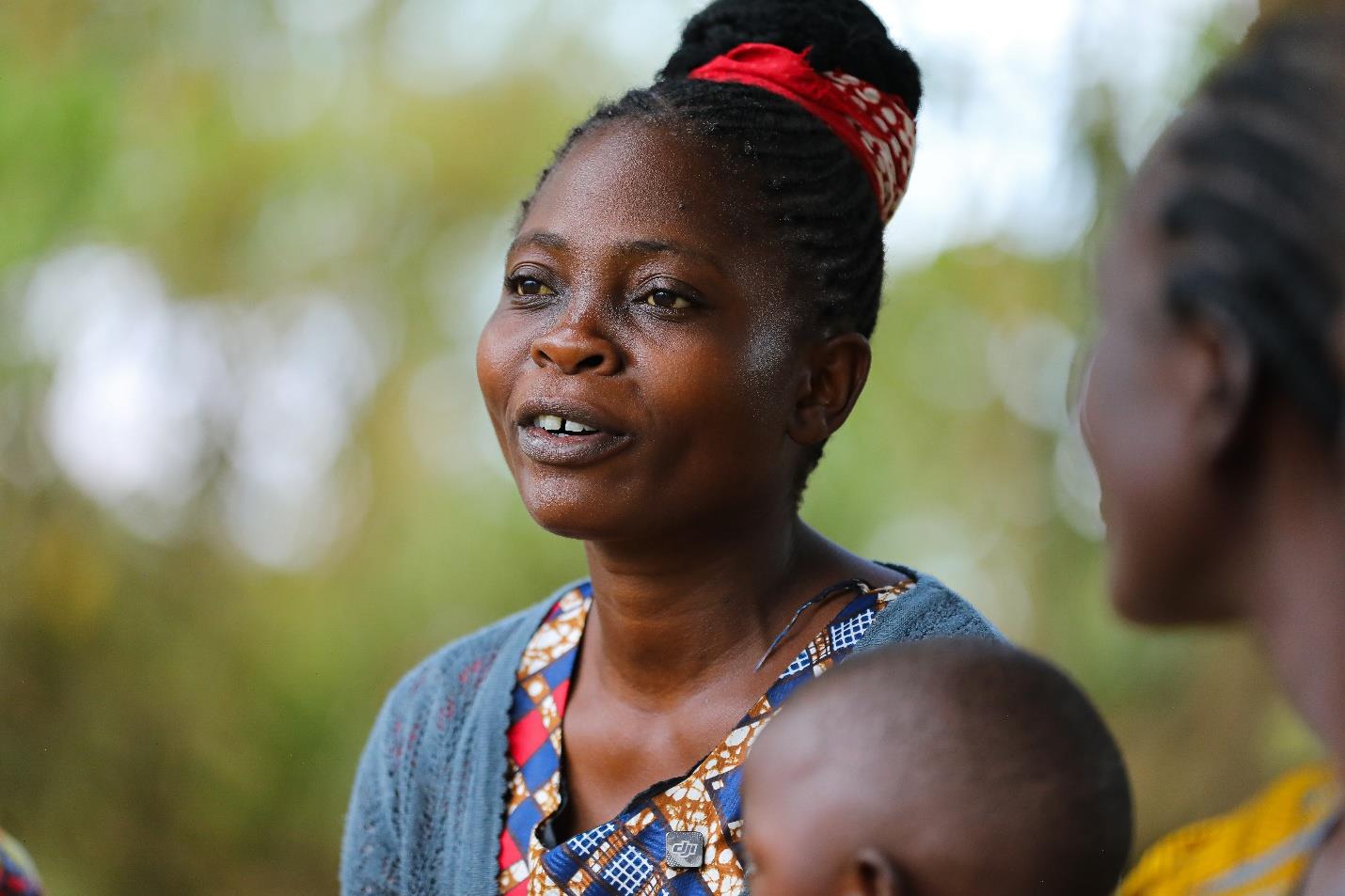
However, for some teenage mothers, that moment does not mark the end. With the right guidance and steady mentorship, they are finding their way back and rewriting the futures they once thought were lost.
This is the reality that Faith Okumu from Busagha village, who got pregnant while in Form Two is living. At the time, she believed her life had collapsed.
“It was an awful experience, but I did not allow my situation to break me,” she says.
Faith grew up in a polygamous household where resources were scarce and tension constant. Her parents struggled to provide even basic needs and asking for school fees would often result in beatings.
“My father could beat me every time I asked for school fees,” she says. “That is what forced me to get a boyfriend.”
She later became pregnant after being taken advantage of by the family’s caretaker. When her father found out, she was forced to flee their home and seek refuge at her uncle’s home. Unlike many others, he chose support over blame. “He advised me not to abort my child,” she says. “He told me I could still continue with my education.”
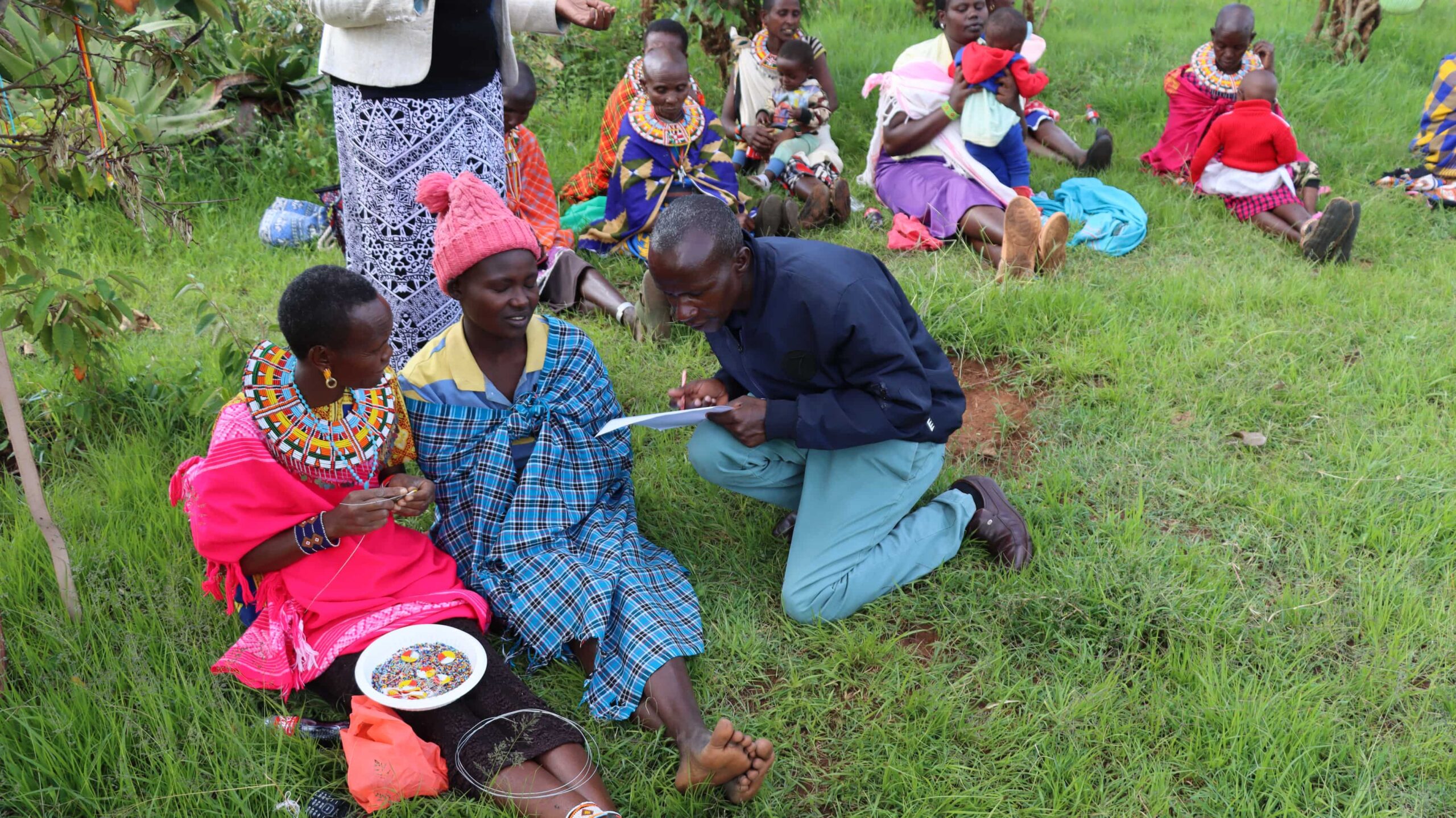
Today, Faith is among the teenage mothers paired with older women mentors who provide psychosocial support, life skills, and guidance on rebuilding their lives. Through this initiative, she gained tailoring skills and now earns her own income. Her uncle’s decision to support her return to school, where she completed her Form Four examinations, marked a decisive turning point.
“My mentor has given me wonderful insights on how to take care of myself and also exploit my skills to earn a living,” she says.
Her story mirrors that of Beatrice Nafula, a 21-year-old young mother from Namkhueso village, who became pregnant at the age of 15 while in class eight, after being coerced by a close relative.
“At that time, I didn’t know anything about protection,” she says. “He told me you cannot get pregnant the first time.”
When her pregnancy was discovered, decisions were made without her consent. Her aunt gave her herbal medicine, which she did not know was meant to induce abortion.
“I was already 5 months pregnant,” she recalls. “I went to school as usual, but on my way back home, in front of the church, I started to bleed. The priest called a member of Bumulusi CBO who promptly took me to the hospital. I narrowly survived,” she says deeply reflecting.
Nafula recovered and later returned to school and sat her KCSE examinations in 2024, attaining a C– grade. She credits the Bumulusi CBO for encouraging her to resume learning after identifying her as one of the teenage mothers in need of support.
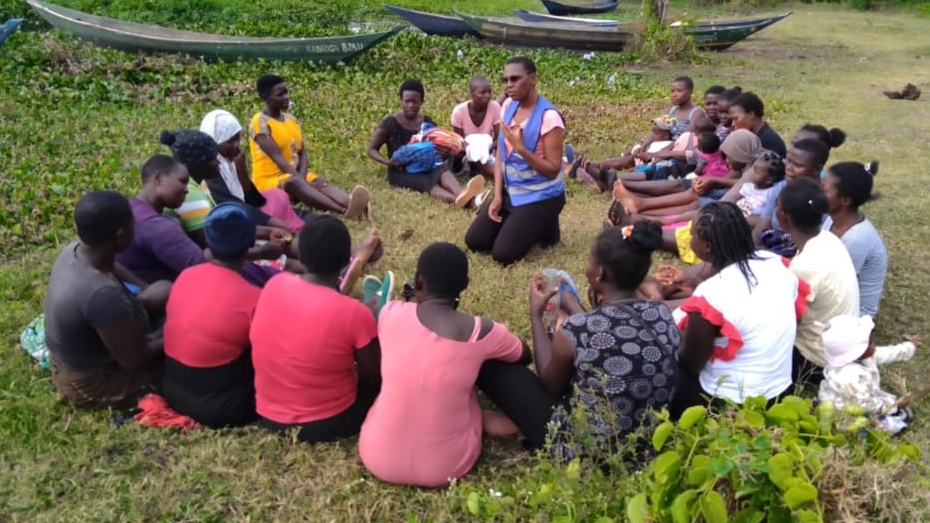
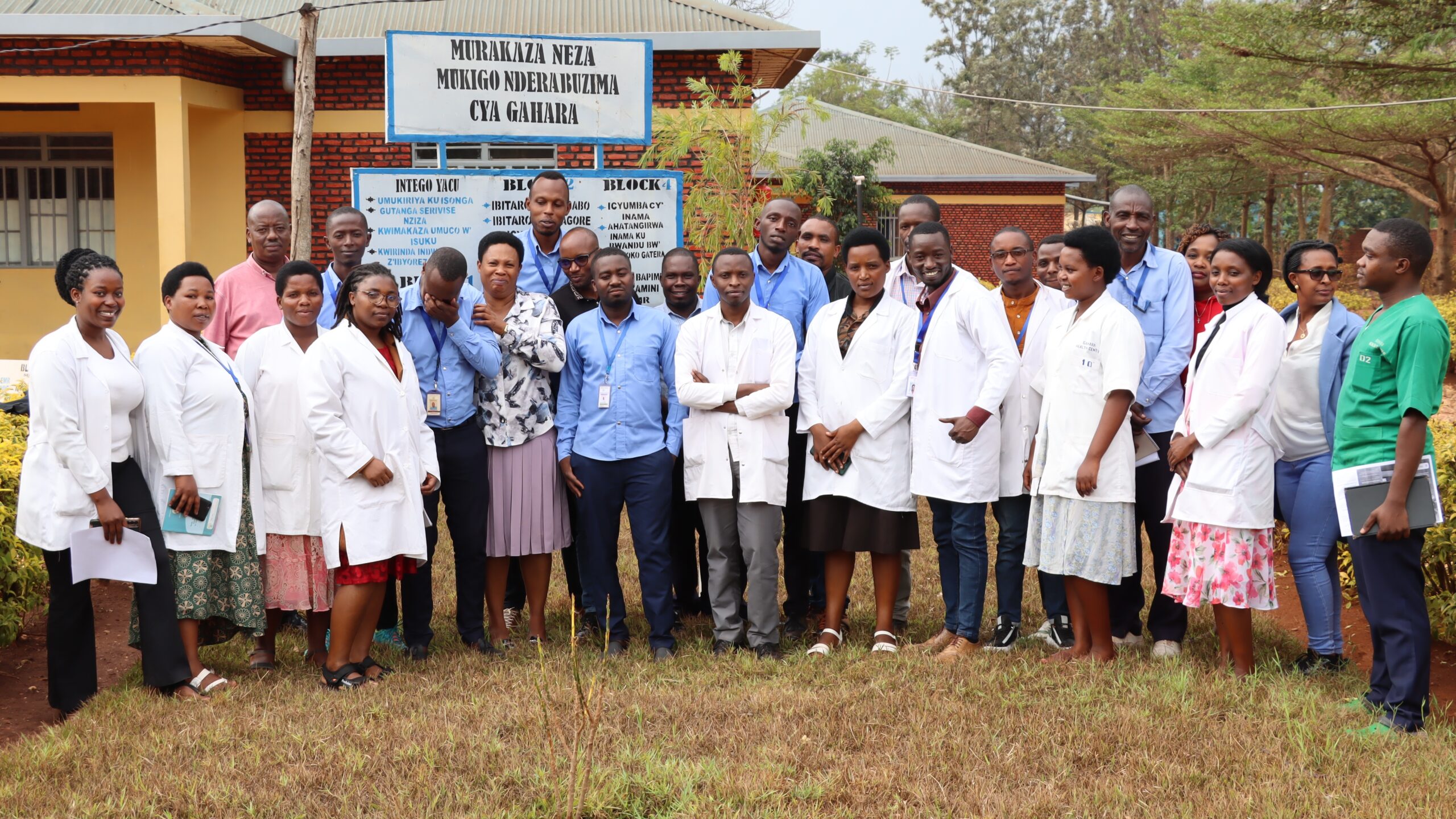
At the centre of this transformation is a structured mentorship model led by Bumulusi CBO. According to chairperson Pamela Naumwo, the organization has linked 72 teenage mothers with trained mentor-mothers who provide guidance on child-rearing, mental health, family relationships, and reintegration into school and community life. Bumulusi partners with organizations like Ipas Africa Alliance to train mentor mothers and other stakeholders and equip them with the knowledge and skills needed to support teenage mothers and other young women.
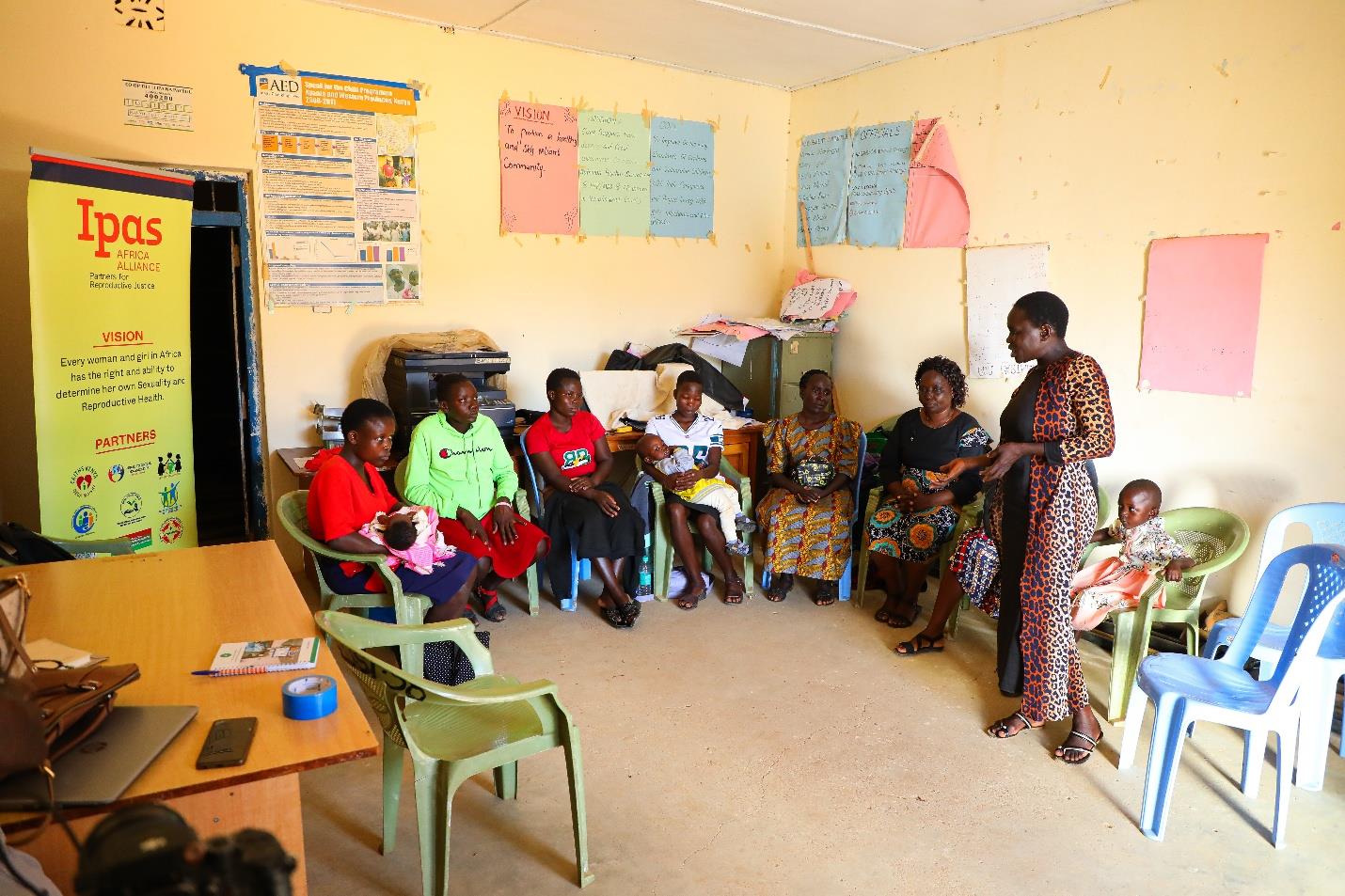
The CBO has established a network of 72 teenage mothers linked to mentor-mothers who provide guidance and support in child-rearing, balancing family and school responsibilities, and counseling—especially for married teenage mothers on how to relate with their husbands and mothers-in-law. Additionally, 10 of the 72 girls have successfully returned to school – an outcome that has begun to reduce stigma and shift community attitudes towards teenage motherhood. Mentor-mothers also accompany girls who need reproductive health services, referring them to appropriate facilities, ensuring confidentiality, and helping them follow medical guidance.
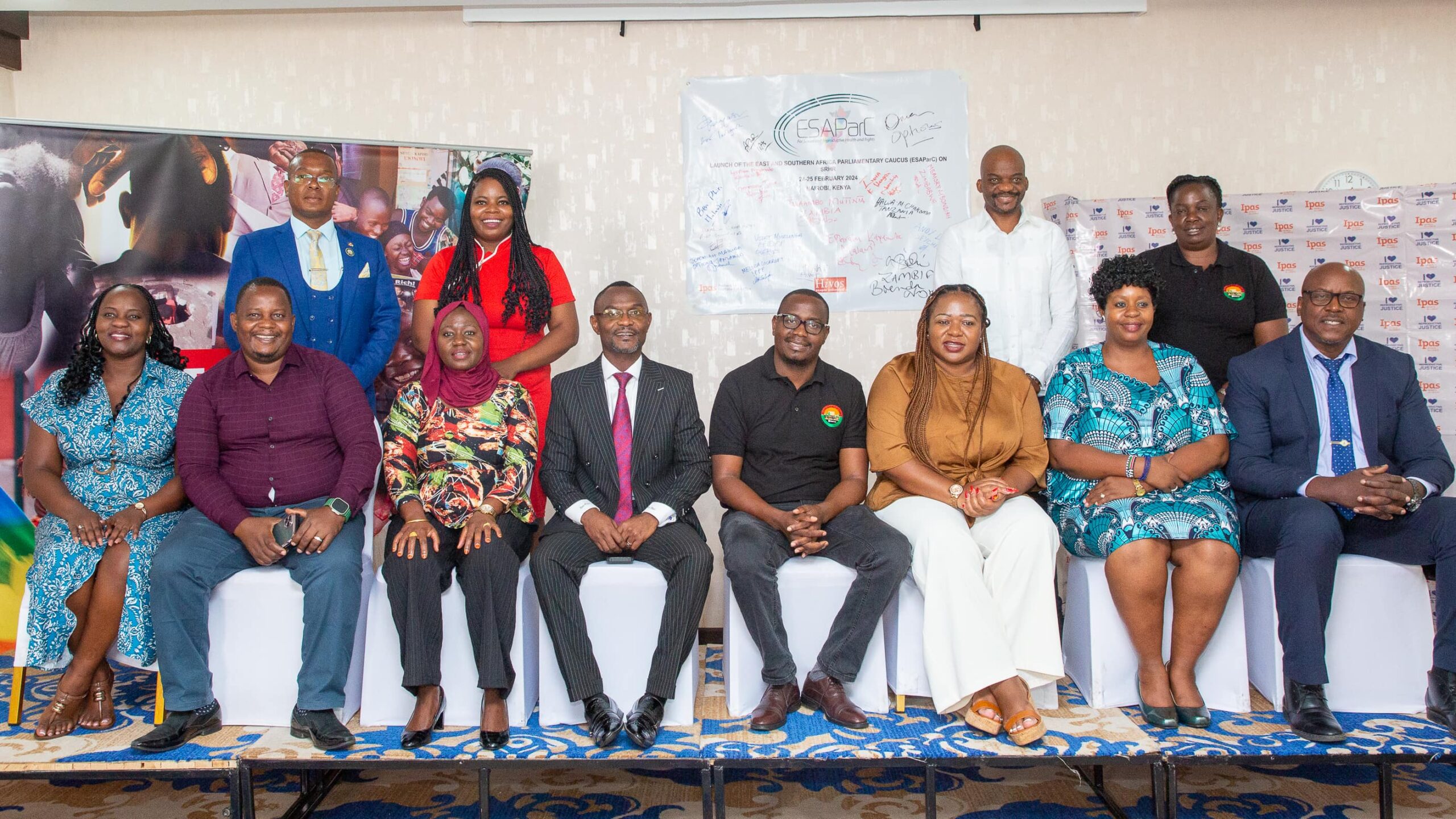
Naumwo notes that a key turning point came in 2017, when Bumulusi partnered with Ipas Africa Alliance and received training on safe and unsafe abortion.
“It was a massive eye-opener,” she says. “Ipas has helped save many lives for both young girls and women.”
Lucy Nahututu, a 15-year-old teenager from Busangavia village, testifies that the support was critical. When peers pressured her to abort her pregnancy, she refused. Her parents stood by her decision.
“They feared the worst for me,” she says quietly.
Lucy later delivered her baby through a caesarean section and survived. Today, she is preparing to return to school.
“My mother has promised to stay with the baby as I continue with my education, “she says with a sigh of relief.
In parts of Kakamega, mentorship is becoming more than guidance. It is a bridge back to education, dignity, and hope. For teenage mothers once written off, these programs are turning interruption into possibility and ensuring that motherhood does not mark the end of a girl’s future.